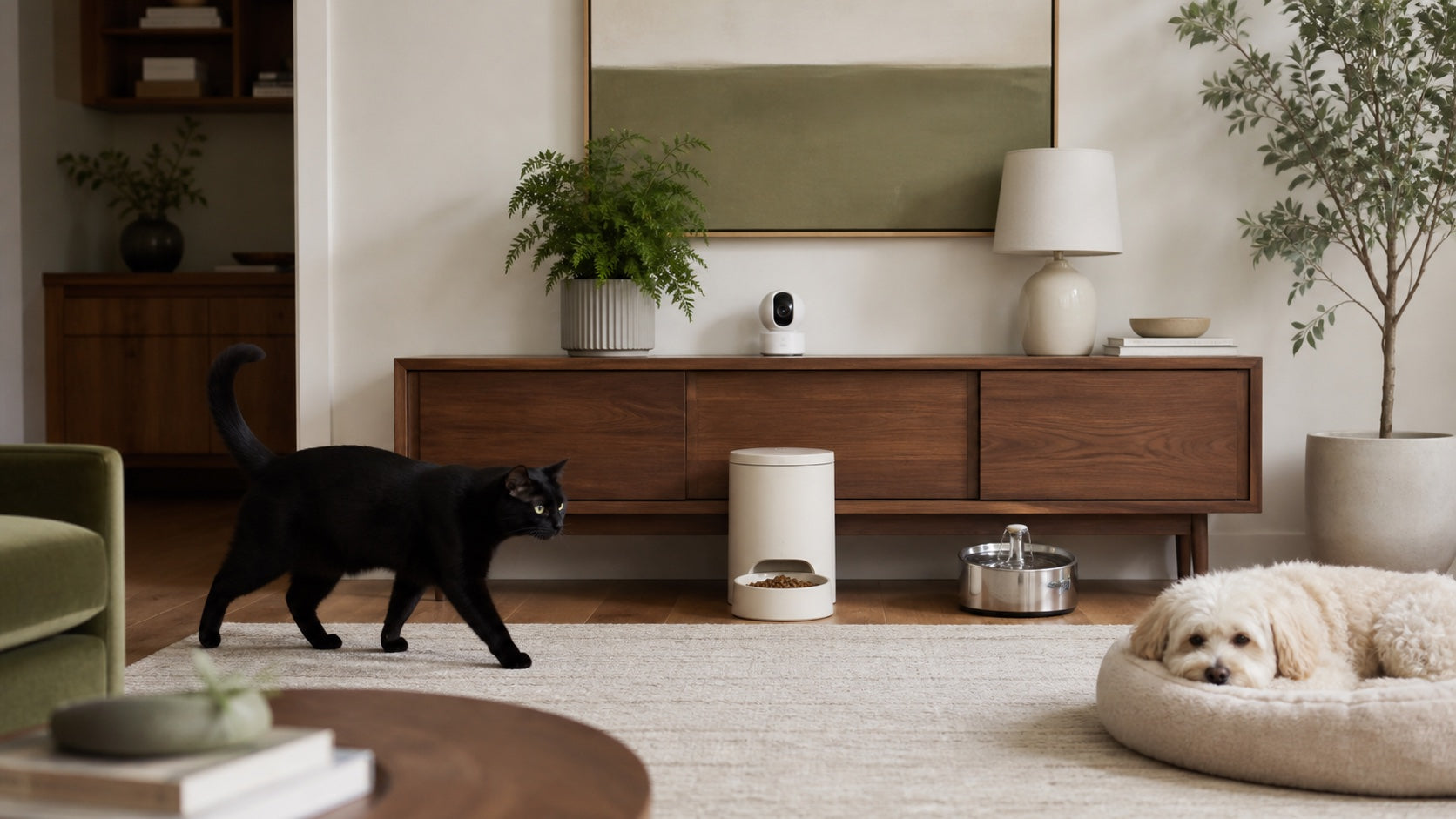
Pet technology can make routines steadier, but novelty is not the same as usefulness. The strongest products quietly remove friction while keeping the pet parent informed and involved.
Define one job
Before comparing features, finish this sentence: “I need help with…” Perhaps it is portion consistency, fresh water, a cleaner litter routine, or seeing what happens while you are away. If a product cannot explain how it improves that job, extra connectivity will not make it essential.
Ask what happens when it fails
Consider power loss, an empty hopper, a blocked pump, lost Wi-Fi, or a full waste drawer. Good design makes failure visible and leaves a safe manual option. Test alerts and backup behavior before depending on the device during a long day away.
Maintenance is part of the product
A connected device still touches food, water, fur, dust, or waste. Check how often it needs cleaning, whether parts can be removed without tools, and whether filters or liners create ongoing cost. A feature is not convenient if it turns a two-minute task into a fragile weekly project.
Protect the relationship
Automation should not remove observation. Appetite, drinking, elimination, mobility, and behavior all communicate useful information. Data can support what you notice, but it should not replace looking at your pet and responding to changes.
Use a five-question filter
- Does it solve a problem we actually have?
- Is it safe and comfortable for this individual pet?
- Can everyone in the home operate and clean it?
- Is there a clear plan when power or connectivity fails?
- Will it still be useful after the novelty fades?
The best pet technology does not make the home feel more technical. It makes care feel calmer, clearer, and easier to sustain.