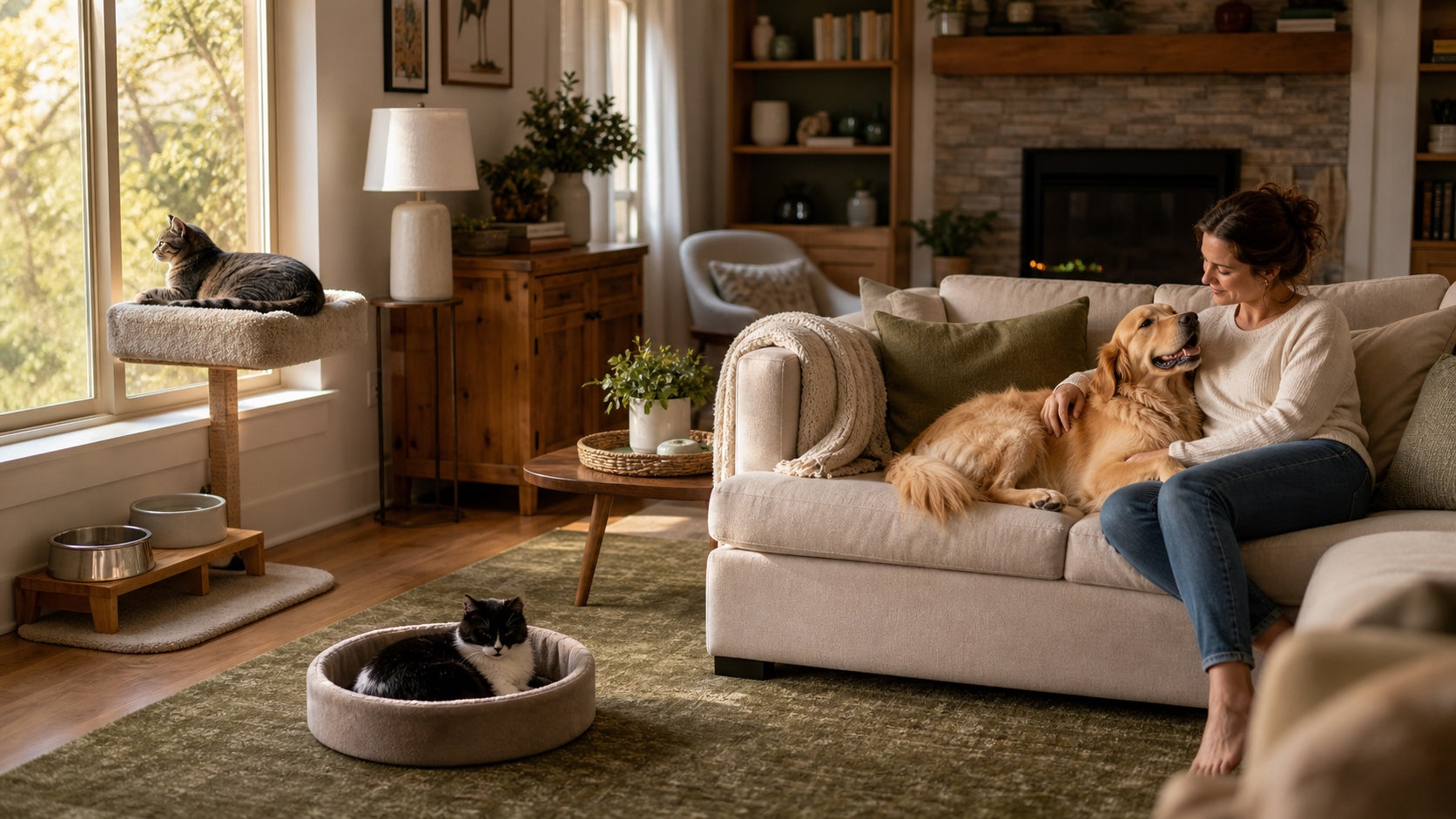
A peaceful multi-pet home is not created by asking animals to share everything. It is created by reducing the number of moments in which they must compete, wait, or pass too closely.
Duplicate the important resources
Provide separate feeding stations, more than one water source, and multiple resting areas. Cats also need litter resources and vertical options placed so one animal cannot easily guard every route. Distance matters: two bowls side by side may still function as one contested resource.
Protect movement
Walk through the home at pet height. Look for narrow hallways, dead ends, and doorways where one pet could block another. Furniture placement, gates, shelves, and open paths can create alternate routes without making the room feel clinical.
Feed with intention
Meals are a common pressure point. Use separate rooms or visual barriers when needed, collect unfinished food, and do not require pets to eat shoulder to shoulder. Scheduled or access-controlled feeding can help, but only if every pet can eat without being rushed.
Give each pet individual time
Short, predictable periods of play, training, grooming, or quiet contact reduce the feeling that attention is scarce. Match the activity to the individual: one pet may want a chase game while another prefers a slow sniffing walk or a warm lap.
Notice early signs
Conflict is not always noisy. Watch for staring, blocking, hiding, sudden changes in room use, resource avoidance, over-grooming, or one pet waiting until another leaves. Small environmental changes are easier to make before tension becomes a habit.
If aggression, persistent fear, elimination changes, or injury occurs, separate animals safely and seek qualified veterinary or behavior support. A calm home does not require every pet to be best friends. It requires each one to have safe access, choice, and enough space to relax.
Find the moment where access breaks down, then change that moment.
A home can look well supplied and still leave one pet waiting at every important resource. Instead of counting bowls alone, follow each animal's route to food, water and rest. The useful question is whether they can reach and leave the resource without another pet controlling the path.
Two bowls are available, but one pet still waits
Note the room, time and animal present when the waiting happens. Bowls beside one another can be guarded from one position, so try giving each feeding location its own approach, distance or visual separation. Watch the full meal rather than checking only that food disappeared. Use separate rooms when needed, and keep access suitable for the individual pet. A standard scheduled feeder does not determine which animal ate. Once each pet can eat calmly, review timing and portions separately instead of asking one shared device to resolve competition by itself.
The resources are separate, but the route is not
Sketch where food, water, litter and resting places sit, then mark doors, narrow passages and dead ends. Look for a route where one animal can watch or block several resources without moving. In a small home, a visual barrier or a second location on a different approach can be more useful than placing more items in the same corner. For cats, maintain separate resource areas and safe resting options rather than gathering everything into a single cat zone. Make sure any barrier preserves exits and does not trap an animal beside a resource.
How will I know the change helped?
Keep a simple note for each pet: where they ate or drank, whether they paused or retreated, and whether another animal was nearby. Change one placement or access arrangement at a time so you can compare the same moment on later days. Look for easier access and relaxed departures, not a requirement that pets share a bed or become close companions. Do not punish waiting, hiding or warning behavior. Persistent blocking, chasing, fear or changes in eating, drinking or toileting need veterinary or qualified behavior guidance; a resource rearrangement is not a substitute for an individual assessment.
Walk through the setup from each pet's point of view
- Can each pet reach food and water without waiting for another animal to leave?
- Are duplicated resources genuinely separated by location, approach or a suitable visual barrier?
- Can a pet leave a resting or resource area without being cornered?
- Am I observing each animal's access instead of relying on one empty bowl or a quiet room?